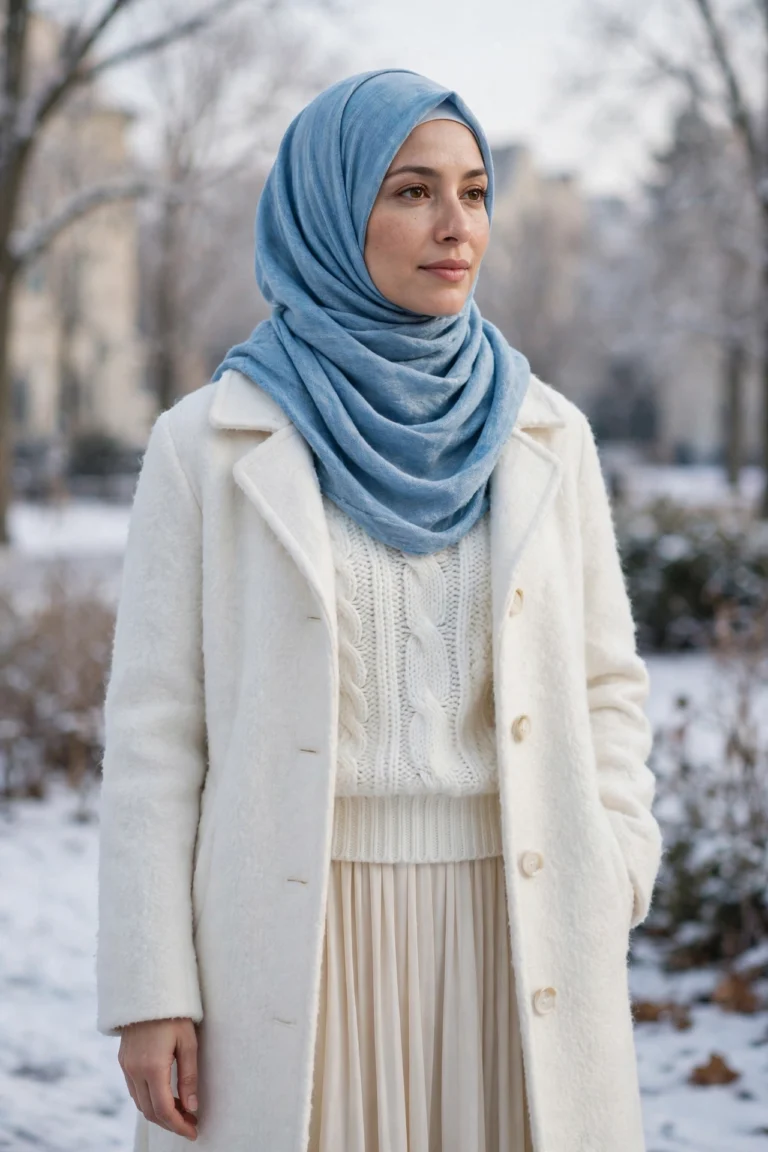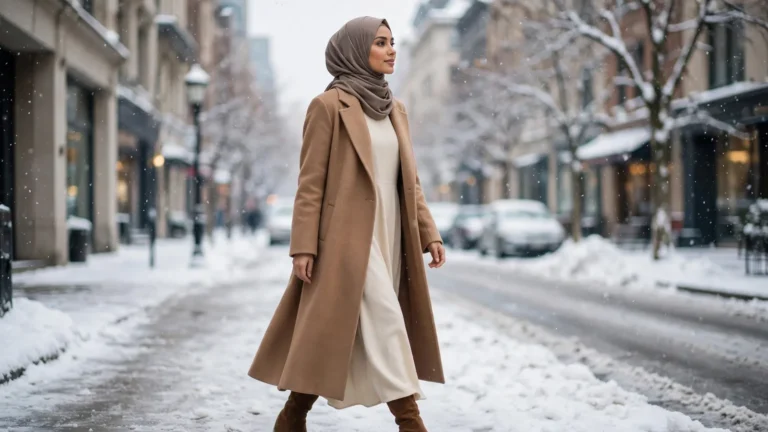
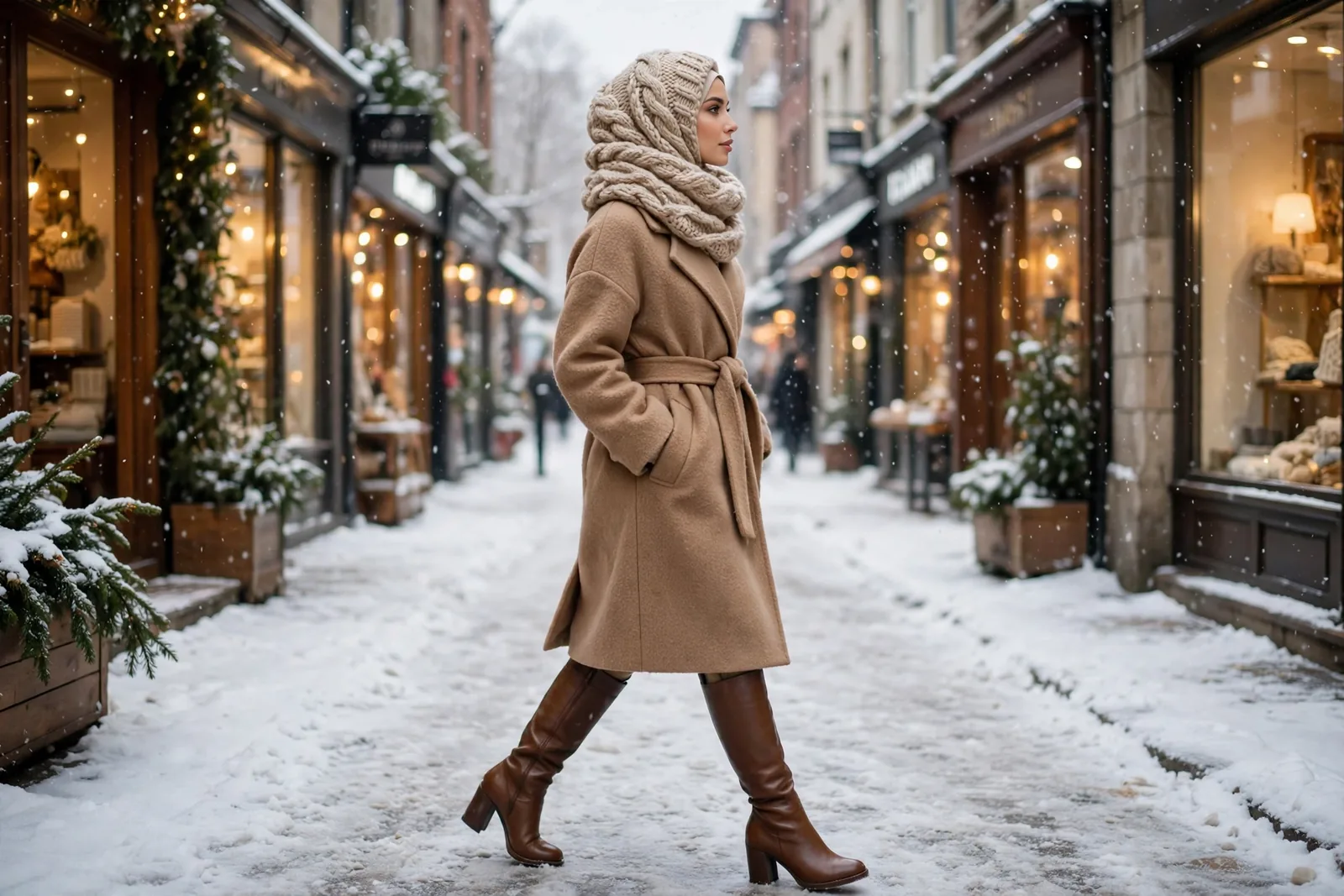
Winter dressing as a hijabi is really a layering puzzle: staying warm without bulk while keeping every layer modest, from the neckline to the boot tops. This guide shows you exactly how to style hijab in winter, pairing the right coats, boots, and fabrics so you stay cozy, covered, and polished from frosty mornings to evening events.
You will learn which coat collars frame a hijab beautifully, how boots pair with long hemlines, and which fabrics trap the most heat around the neck and ears. We also cover snow and static care, so your hijab looks fresh all day. Consider this your complete seasonal playbook for warm, elegant, modest winter dressing.
Choose a Warm, Non-Slip Hijab Base
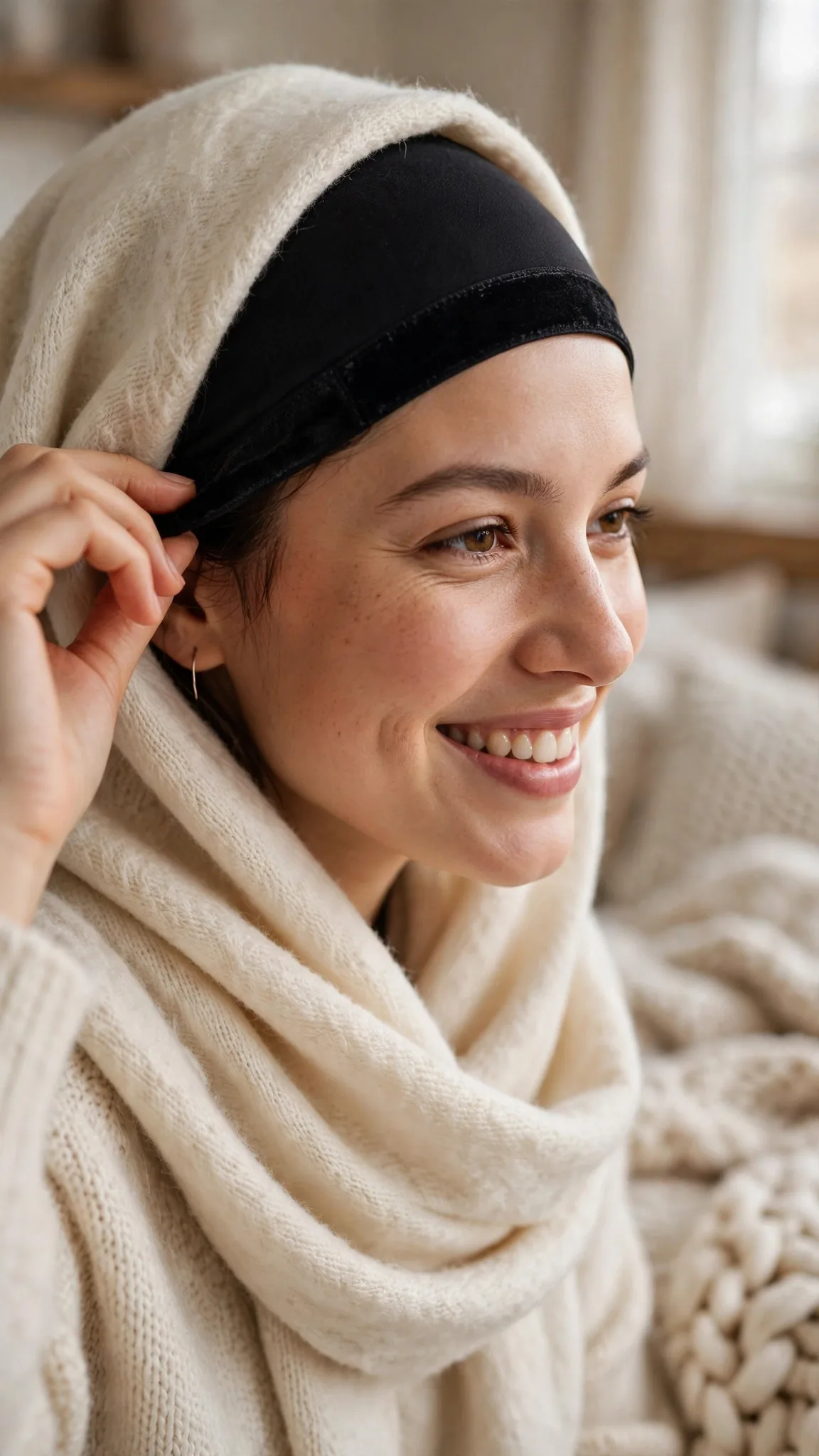
Everything warm starts with what sits closest to your head. A cotton or bamboo undercap with a snug, non-slip band keeps your hijab locked in place while adding a thin insulating layer that traps body heat. Silk-lined undercaps are worth trying too, because they reduce friction against your hair and feel softer on cold mornings. Choose a full-coverage undercap rather than a tube, since it warms your forehead and ears like a headband. When the base is secure and warm, every wrap you build on top drapes more neatly and stays put all day.
Look for undercaps with a wide velvet or silicone-lined band, which grips without pulling your hair. Darker shades like black, brown, and navy disappear under winter hijabs, while a cream or beige option works for light-colored wraps. Wash undercaps in a gentle cycle, since they absorb the most sweat and product, and keep at least three in rotation. If you dislike the tight feeling of full caps, try a ninja-style inner with an attached neck cover for extra warmth. A well-chosen base is invisible in photos but obvious in how confidently your hijab stays put.
Layer a Turtleneck Under Everything
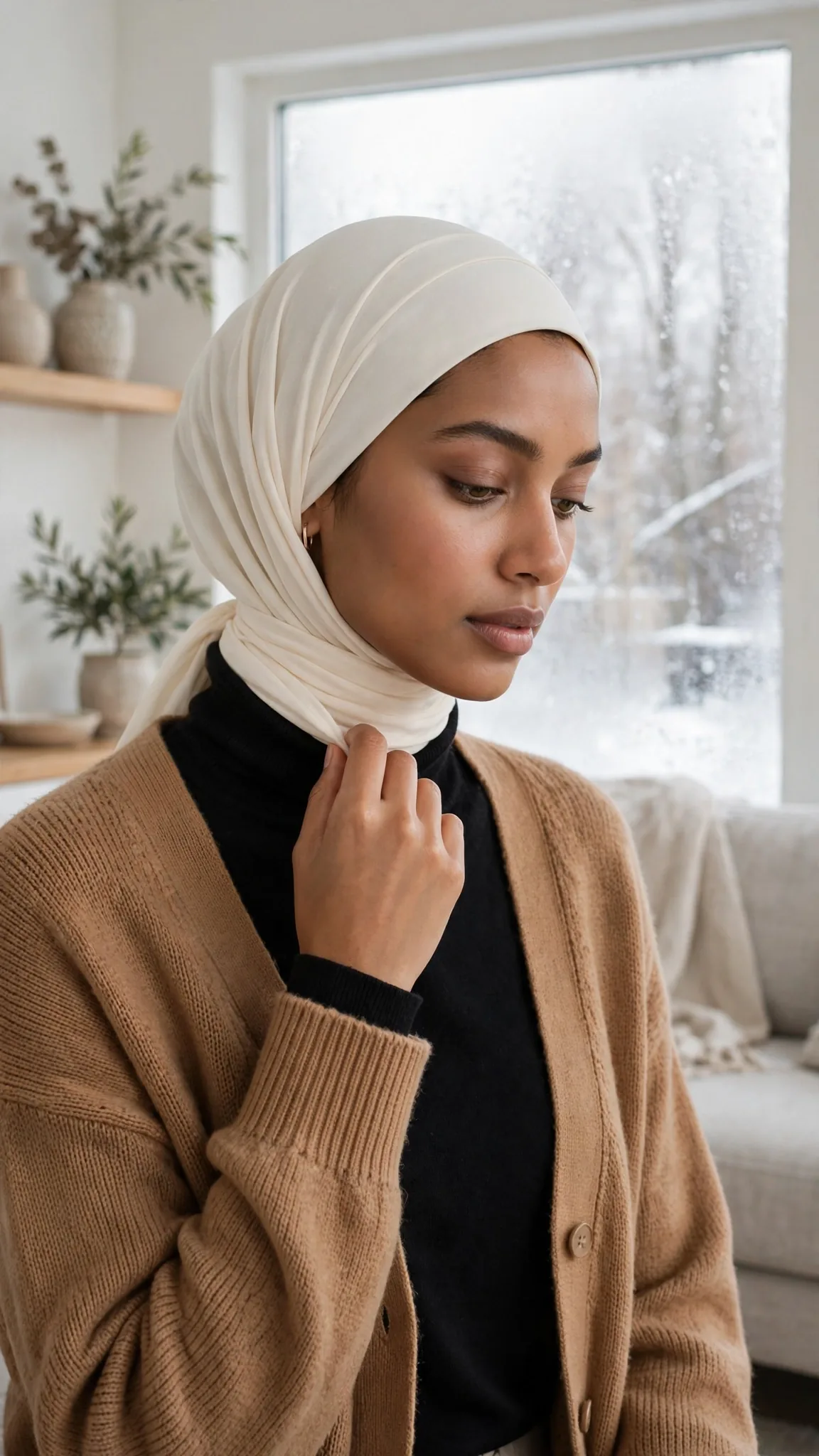
A fitted turtleneck is the hardest-working piece in a winter hijabi wardrobe. Worn under dresses, cardigans, and blazers, it closes the neckline gap completely so no cold air sneaks between your hijab and your top. Merino wool or thermal-blend turtlenecks add real warmth without thickness, and a mock neck works when a full turtleneck feels too warm indoors. Keep two or three in neutral shades like black, cream, and camel so they disappear under any outfit. The result is a smooth, covered foundation that makes every coat and wrap look intentional.
To keep the look sleek, tuck the turtleneck into high-waisted trousers or skirts so no fabric bunches at the waist. If your dress has a wide or boat neckline, the turtleneck underneath fills it in while your hijab covers the rest, which is a simple trick for making summer dresses winter-ready. Learning how to style hijab in winter gets easier when every base layer multitasks like this. Avoid chunky cable-knit turtlenecks as a base, since they add bulk under blazers; save those for wearing on their own with an open abaya instead.
Pick a Coat with a High Collar
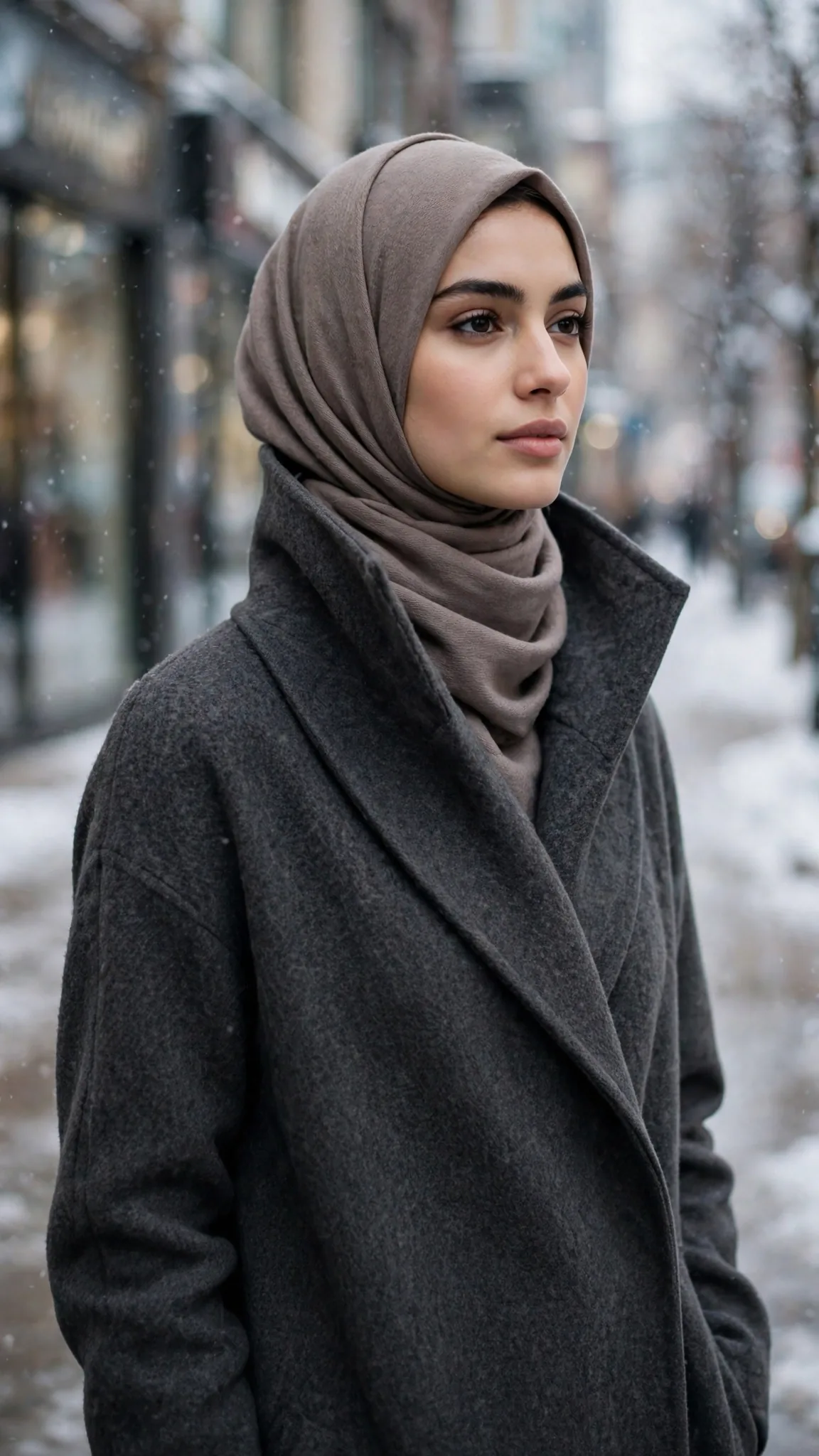
When you are learning how to style hijab in winter, the coat you choose matters as much as the wrap. A high collar, funnel neck, or stand-up collar frames the hijab beautifully while shielding the sides of your neck from icy wind. Look for collars that sit just below the jawline so they do not push the fabric up into your face. Wool-blend wrap coats and structured parkas with storm collars both work well here. Avoid wide boat necks or open lapels in cold, since they expose the spots your hijab is trying to protect.
Once the coat is on, style the collar and hijab as a pair. Pop a structured collar up behind the wrap for a chic, weatherproof frame, or tuck a soft hijab tail inside a funnel neck so nothing flaps in the wind. If your coat has detachable faux-fur trim, keep it on the hood and away from the neckline to avoid rubbing delicate fabrics. For evenings out, lower the collar slightly and let the hijab drape over it. Small adjustments like these turn a practical coat into a styling asset.
Master the Blanket-Scarf Wrap
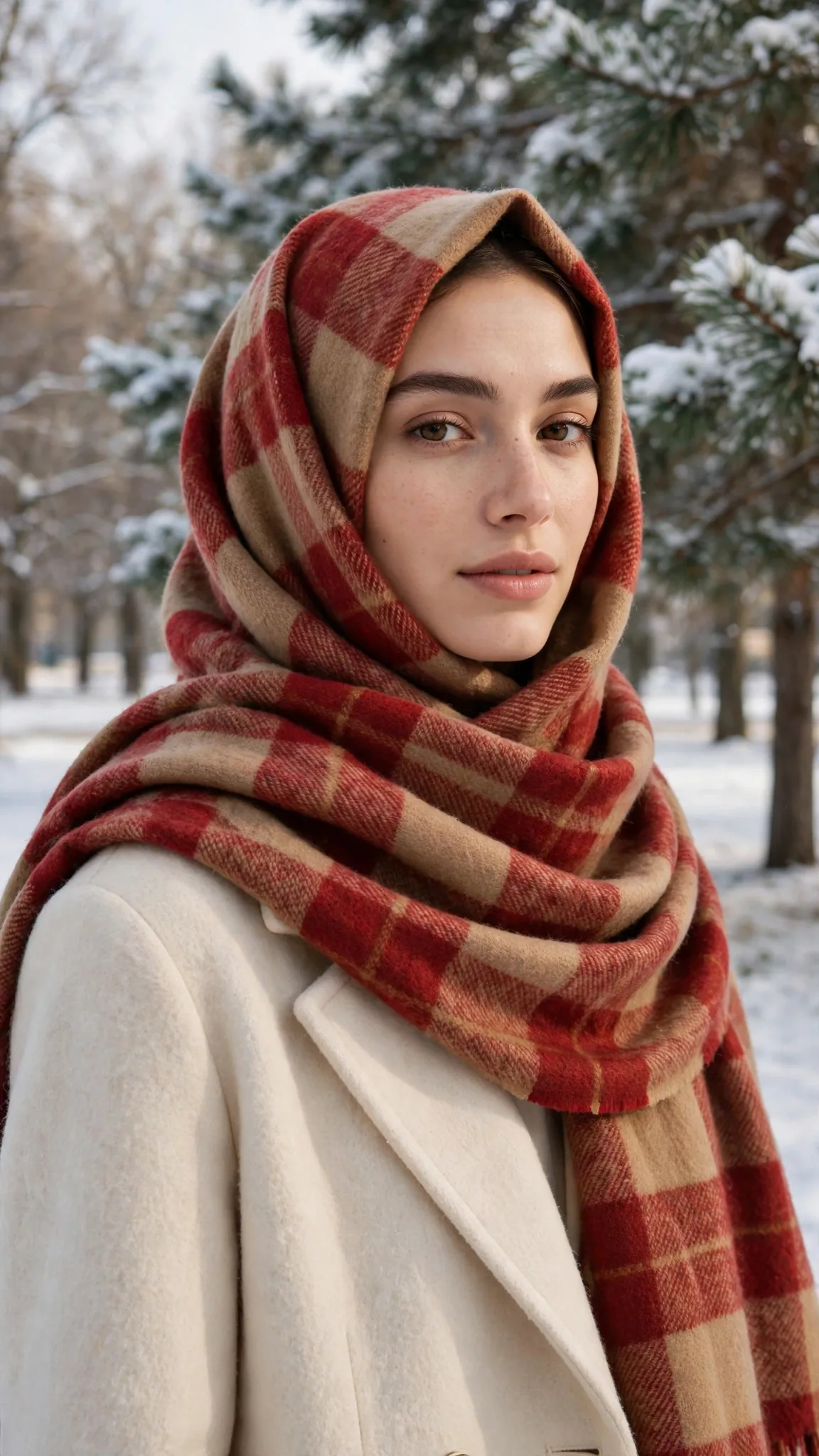
An oversized blanket scarf in wool or a wool blend can double as your hijab and your neck warmer in one step. Drape it loosely over your undercap, cross the ends under your chin, and let them fall over a coat for instant full coverage that blocks wind. Because the fabric is thick, it holds its shape with fewer pins and will not shift when you pull a hood up. Choose plaid, houndstooth, or solid camel and charcoal tones that flatter winter coats. This approach is the fastest way to look polished on freezing mornings.
To keep the blanket wrap secure, anchor it with two pins at the temples and one under the chin, then hide the pins inside the folds. Twist one end once before crossing it for hold on windy days, and let the end hang long over your shoulder for a polished look. If the scarf feels too bulky around the face, fold an edge inward before draping so the frame stays neat. For evenings, switch to a finer merino or cashmere-blend scarf in a jewel tone. The same wrapping method works, just with a lighter finish.
Keep Ears Warm Without Bulk
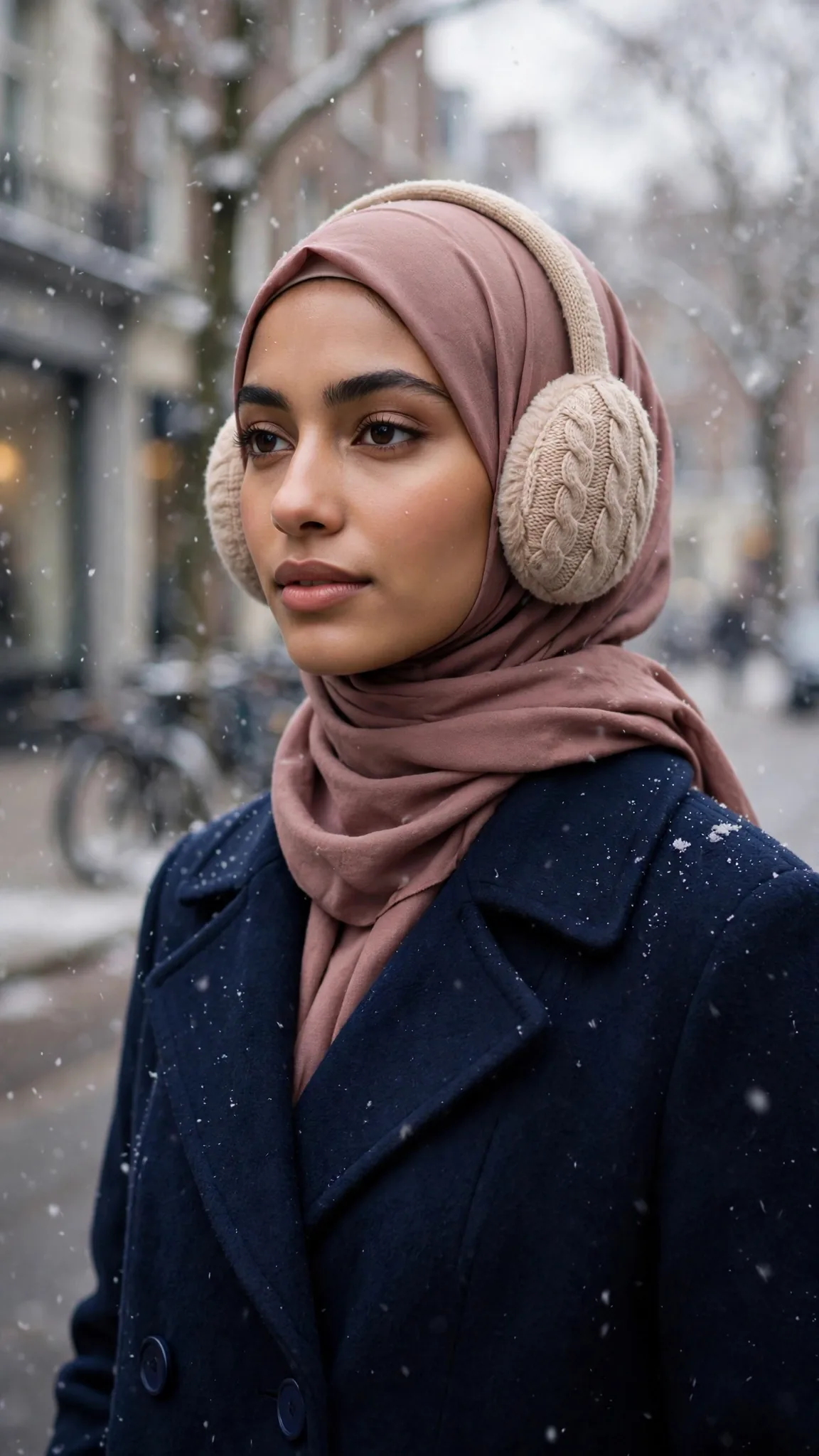
Ears are usually the first thing to ache in cold wind, yet bulky earmuffs can ruin a neat hijab line. The trick is warming them invisibly: slide a thin fleece-lined knit headband over your undercap and under your hijab wrap before you drape it. It sits flat, adds no visible bulk, and keeps the chill off the most exposed skin. On bitter days, wear slim behind-the-head earmuffs over the finished hijab instead; choose a neutral tone that blends with your wrap. Either way, you stay warm without disturbing the drape you worked to perfect.
A wide velvet headband worn over the finished hijab is another elegant option for milder days, doubling as an accessory. Match it to your coat or boots for a coordinated look, or pick a jewel tone to brighten gray winter outfits. When shopping for earmuffs, choose the foldable kind that slip into a coat pocket, and avoid oversized fluffy styles that overwhelm the hijab’s drape. If you wear glasses, position slim earmuffs just behind the arms so nothing presses uncomfortably. Warm ears, kept discreetly, are one of the quiet secrets of polished winter hijab styling.
Style Boots That Work with Long Coats
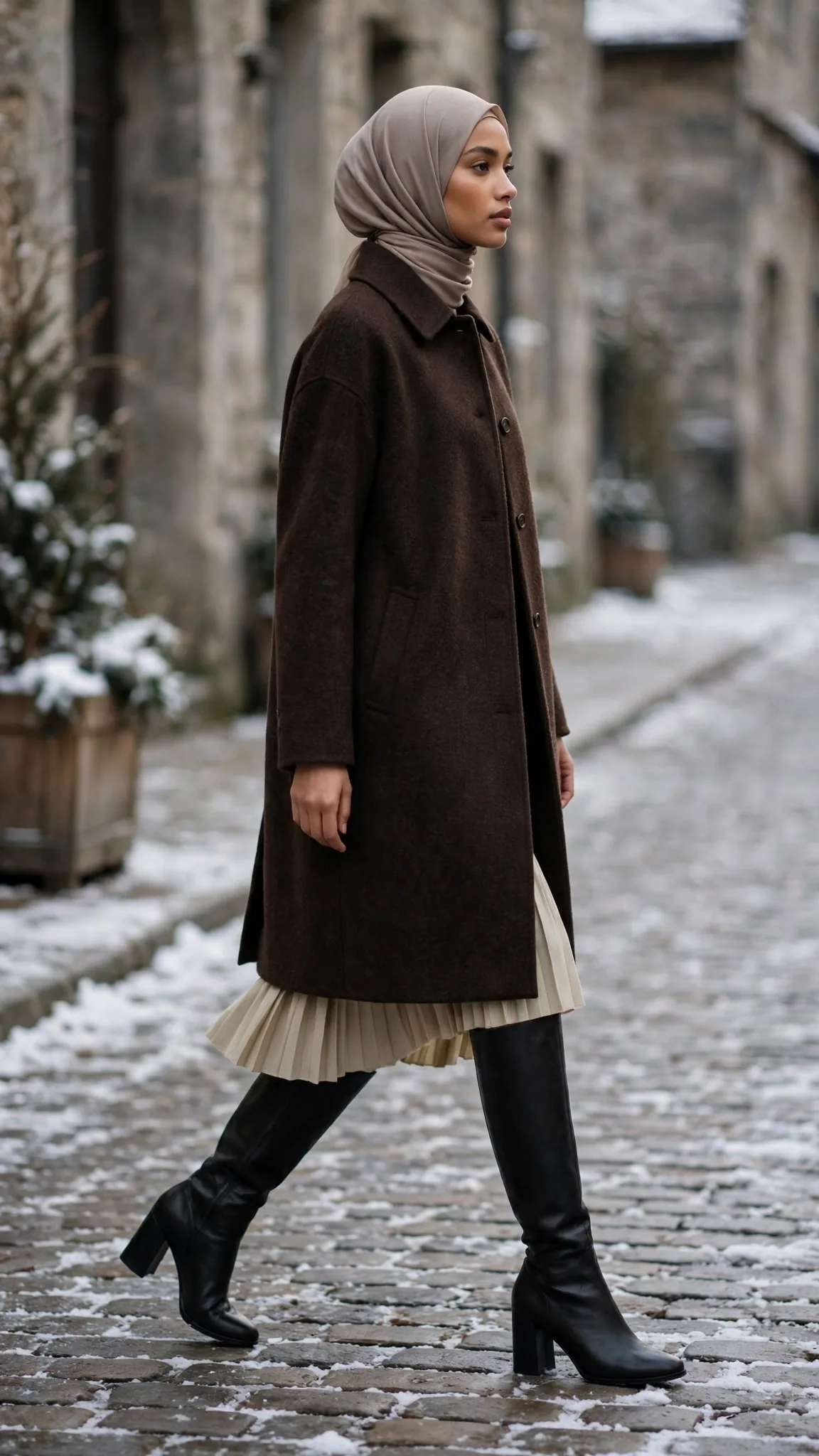
Knee-high boots are a modest dresser’s best friend in winter because they close the gap between a long coat’s hem and the ground. When your coat ends at the knee and your boots rise to meet it, only a slim line of skirt or trousers shows, which keeps the outfit covered and streamlined. Choose boots with a low block heel for icy sidewalks and a shaft wide enough to fit over slim trousers. Black and espresso leather pair with every coat color. This boot-and-coat pairing is the backbone of many warm, modest winter looks.
Ankle boots can work too, but they demand more attention to hemlines. Pair them with wide-leg trousers that break over the boot or a maxi skirt that covers the ankle, so no skin shows when you sit or climb stairs. For heavy snow days, swap fashion boots for sleek waterproof snow boots in black; many now come in slim profiles that look polished with long coats. Whatever boot you choose, add warm thermal socks underneath. The right boots do more than finish the outfit; they keep the entire modest silhouette intact from hem to toe.
Use a Wool Hijab for Extra Insulation
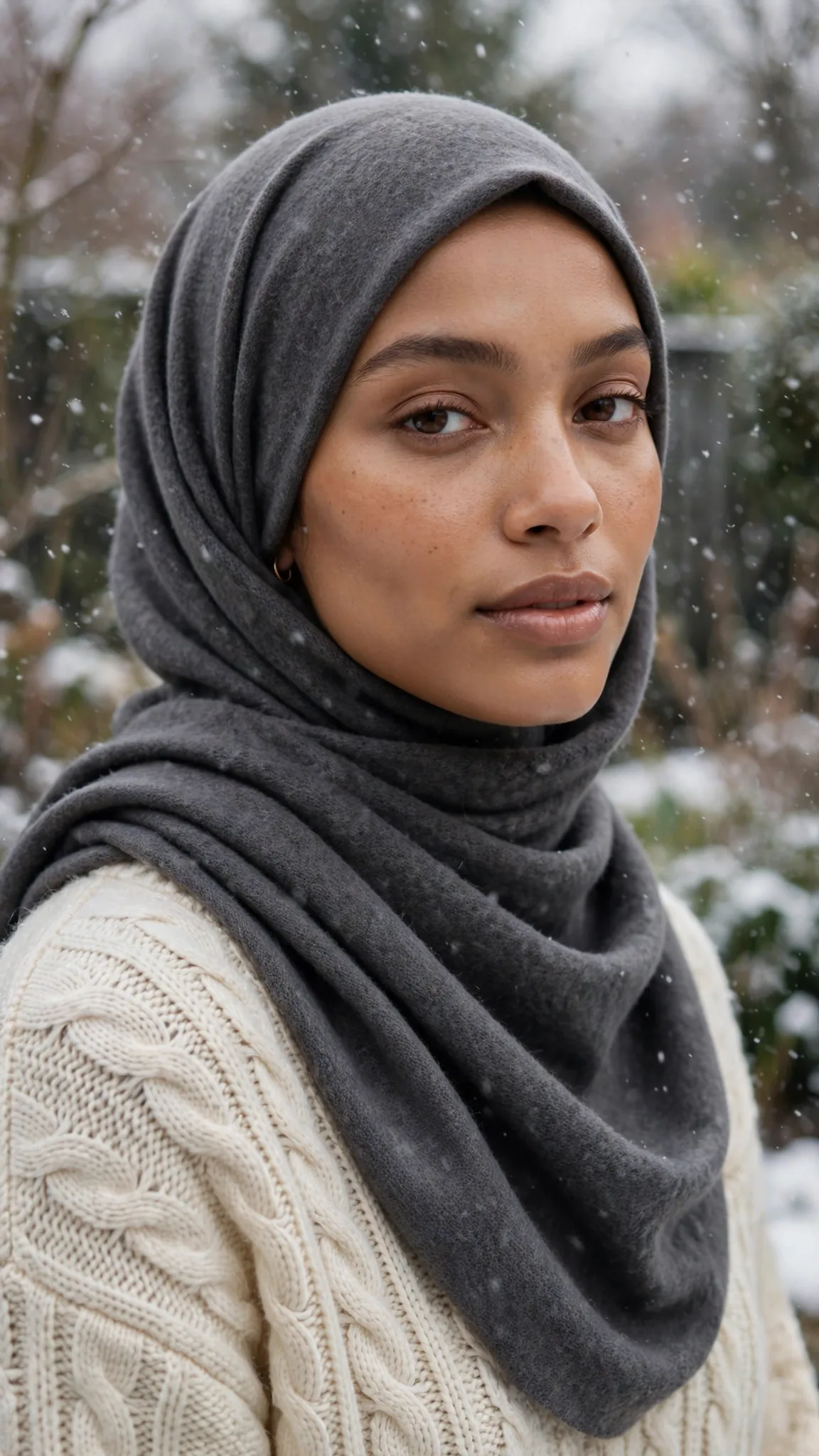
When temperatures drop, swapping lightweight chiffon for wool makes a real difference in how to style hijab in winter. Wool jersey hijabs drape softly, resist slipping, and trap warmth around the neck far better than slick synthetics. Woven wool scarves add even more insulation and hold structured wraps beautifully in wind. Look for a wool blend with a touch of viscose or cashmere so the fabric feels soft against the skin rather than scratchy. Keep one in charcoal, one in camel, and one deep jewel tone, and your coldest weeks are covered in style.
Wool hijabs need slightly different care than chiffon to stay beautiful. Hand-wash or use a gentle wool cycle with cold water, and always air-dry flat so the fabric keeps its shape. Use a fabric comb or de-pilling tool occasionally, since friction from coat collars can cause light pilling along the edges. Store folded rather than hung to prevent stretching, and keep cedar blocks nearby to deter moths. With this simple routine, a quality wool hijab will keep you warm and look refined for many winters to come.
Add Gloves and a Coat with Deep Pockets
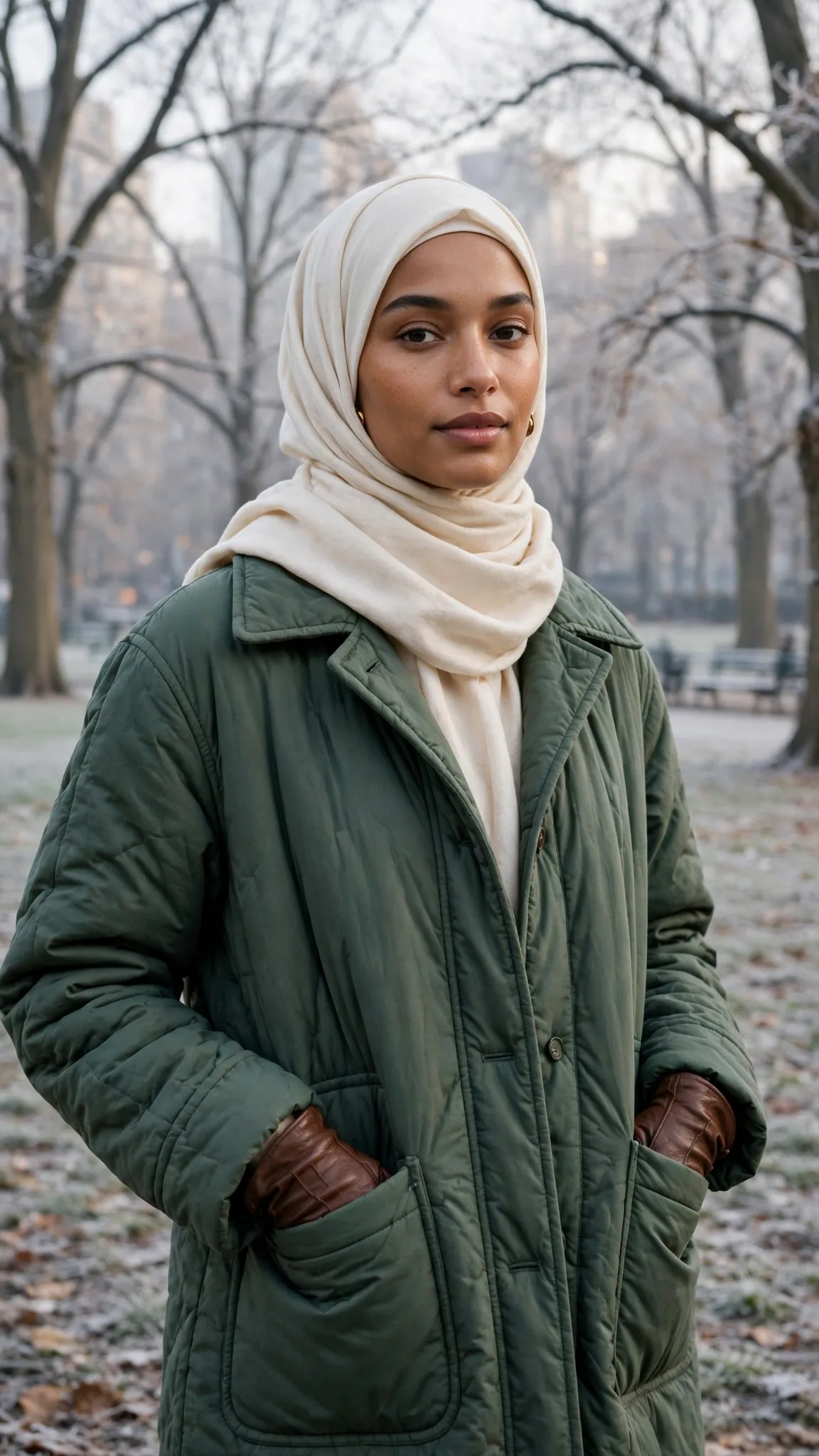
Warm hands make a winter outfit feel complete, and they matter for hijabis who adjust wraps outdoors. Invest in touchscreen-compatible leather or knit gloves so you can fix a slipping pin or answer your phone without exposing your fingers to the cold. A coat with deep, fleece-lined pockets is just as important, giving your hands a warm refuge between tasks. Look for patch or side-seam pockets that sit at a natural hand height rather than shallow fashion pockets. Together, gloves and generous pockets keep every adjustment comfortable, even on the chilliest commute.
Mittens are warmer than gloves because your fingers share heat, so keep a pair of knit mittens for the coldest days and sleeker leather gloves for work. Match your gloves to your boots or bag for a pulled-together look, or choose a deep burgundy or forest pair to add color. If you wear rings, size gloves slightly roomy so they slide on without snagging. And remember the hijabi-specific detail: pins and magnets are easier to handle with thin touchscreen gloves than with bulky ski mittens, so plan your wrap adjustments accordingly.
Try the Puffer-Jacket-and-Silk-Hijab Combo
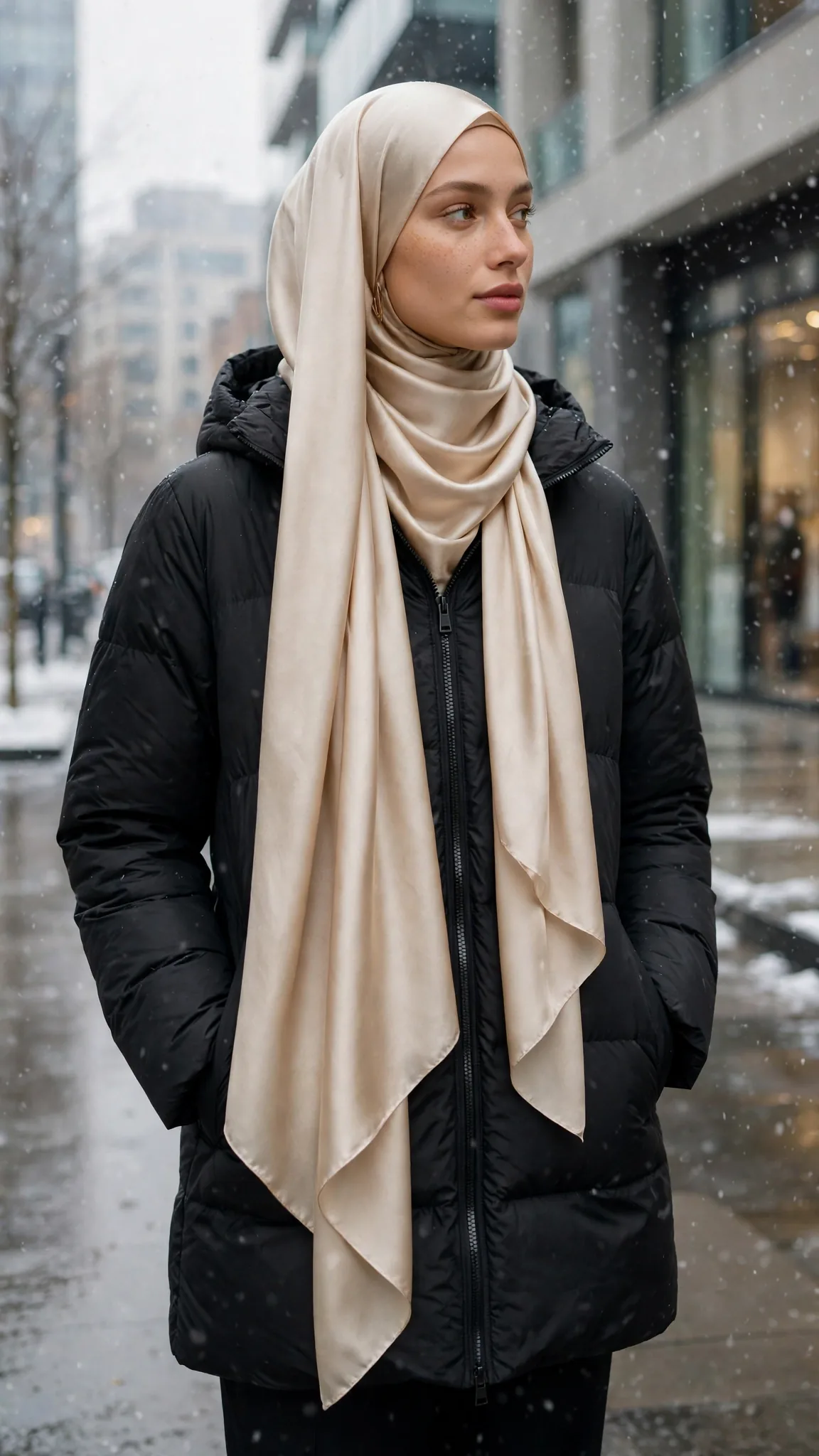
A chunky puffer jacket paired with a smooth silk or satin hijab is a surprisingly elegant combination. The matte, voluminous coat makes the lustrous fabric glow by contrast, creating a high-low look that feels modern and intentional. To keep it modest, let the silk drape long over the puffer’s front zipper and choose a matte puffer rather than a shiny one so the textures balance. Secure the slippery silk with a no-snag pin at the shoulder and a snug undercap beneath. This pairing proves that practical winter gear and refined fabrics can share an outfit.
Choose a puffer that hits at mid-thigh or longer to keep the silhouette modest, and look for a two-way zipper so you can sit comfortably without the front riding up. Matte black, deep navy, and olive puffers pair beautifully with silk hijabs in cream, blush, or champagne. Cinch the waist with the coat’s own drawcord or add a belt over the puffer to define your shape under all that volume. Finish with slim trousers and ankle boots so the proportions stay balanced. Sporty on the bottom, refined on top: that is the formula.
Protect Your Hijab from Snow and Static
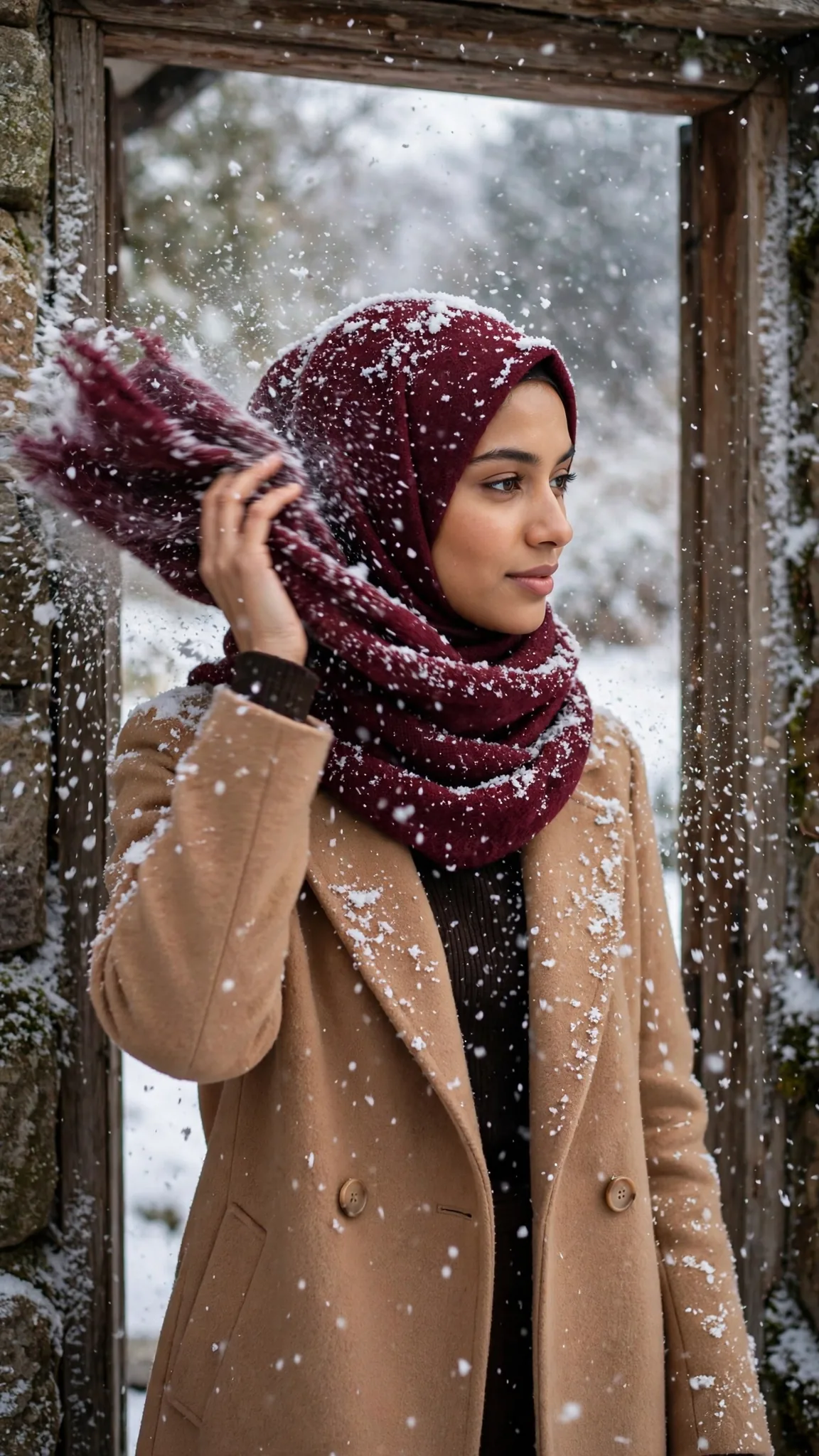
Snow looks magical but it is rough on hijab fabrics when it melts into damp spots. Shake snow off your wrap as soon as you step indoors and hang the hijab to air-dry rather than tossing it on a radiator, which can set water marks. Static is the other winter enemy: wool coats and dry indoor air make chiffon and polyester cling. Rub a dryer sheet lightly over the inside of your coat lining, or mist the air around you with water before wrapping. Keep a small anti-static spray in your bag for touch-ups.
Delicate fabrics like silk and chiffon deserve extra protection: wear them as an inner wrap with a wool scarf layered over the top on snowy days. When traveling, roll hijabs instead of folding to prevent creases, and pack them in a breathable cotton pouch rather than plastic, which traps moisture. At home, give winter hijabs a rest day between wears so fibers recover their shape. A little fabric awareness goes a long way; your favorite wraps will survive many seasons of snow, wind, and dry heated air.
Build a Capsule of 3 Winter Coats
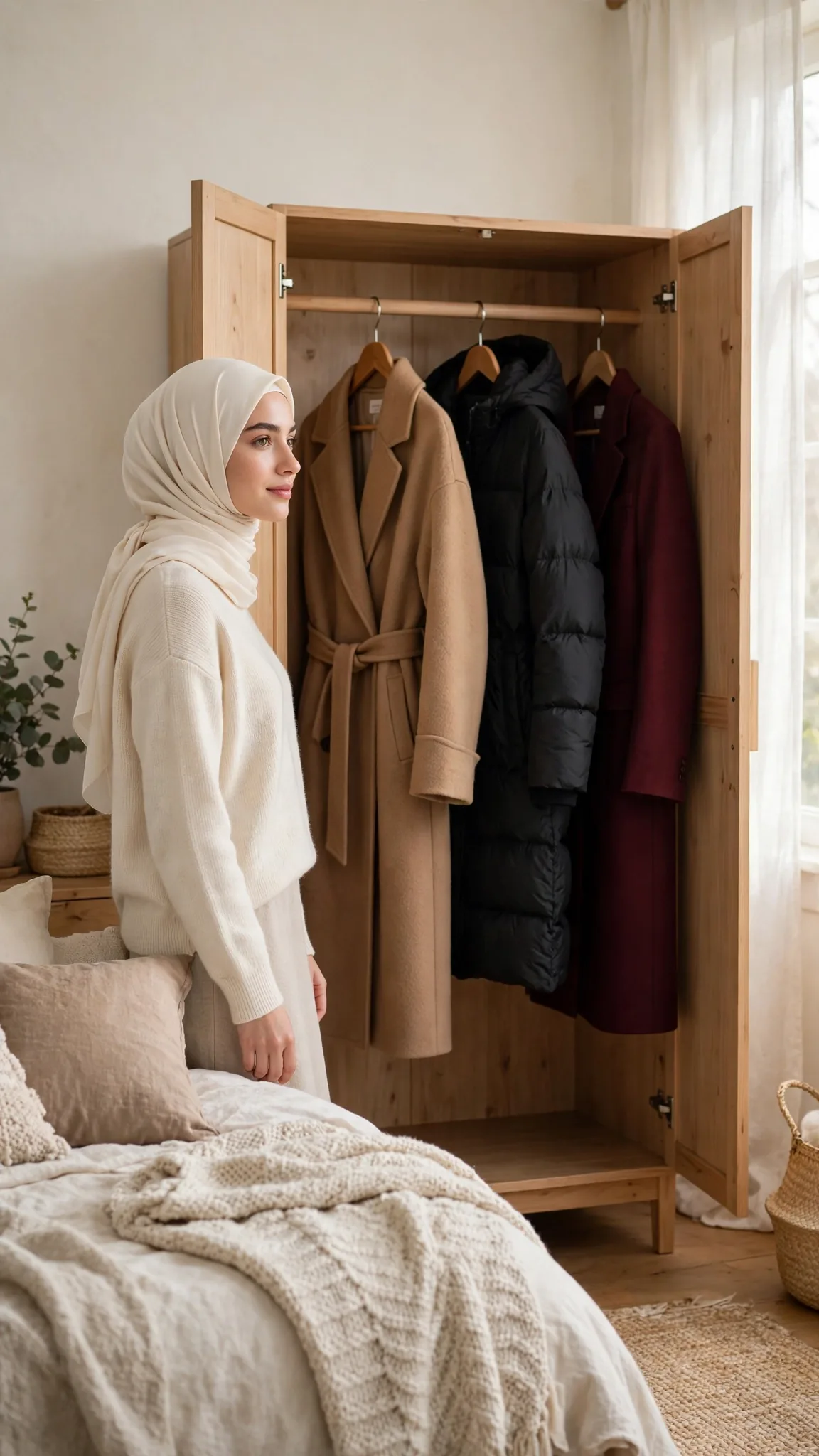
You do not need a closet full of coats to master how to style hijab in winter; three well-chosen ones cover every occasion. Start with a knee-length wool wrap coat in camel or charcoal for daily polish, add a long hooded puffer in black for the coldest commutes, and finish with a dressier tailored coat in a deep tone like burgundy or forest for evenings. Each should have room through the shoulders for layers and a collar that plays nicely with wraps. With just these three, getting dressed on freezing mornings becomes effortless.
Buy the best quality you can afford for these three, since cost per wear drops fast across a whole season. Have the wool coats tailored at the waist if needed; a nipped-in silhouette looks far more elegant with a hijab than a boxy one. Store puffers uncompressed in a breathable bag during summer so the insulation stays lofty. Before each winter, check zippers, re-waterproof the puffer with a spray, and de-pill the wool coats. A small, well-kept capsule beats a crowded closet every time, especially when every piece works with your wraps.
Finish with Modest Evening-Winter Layers
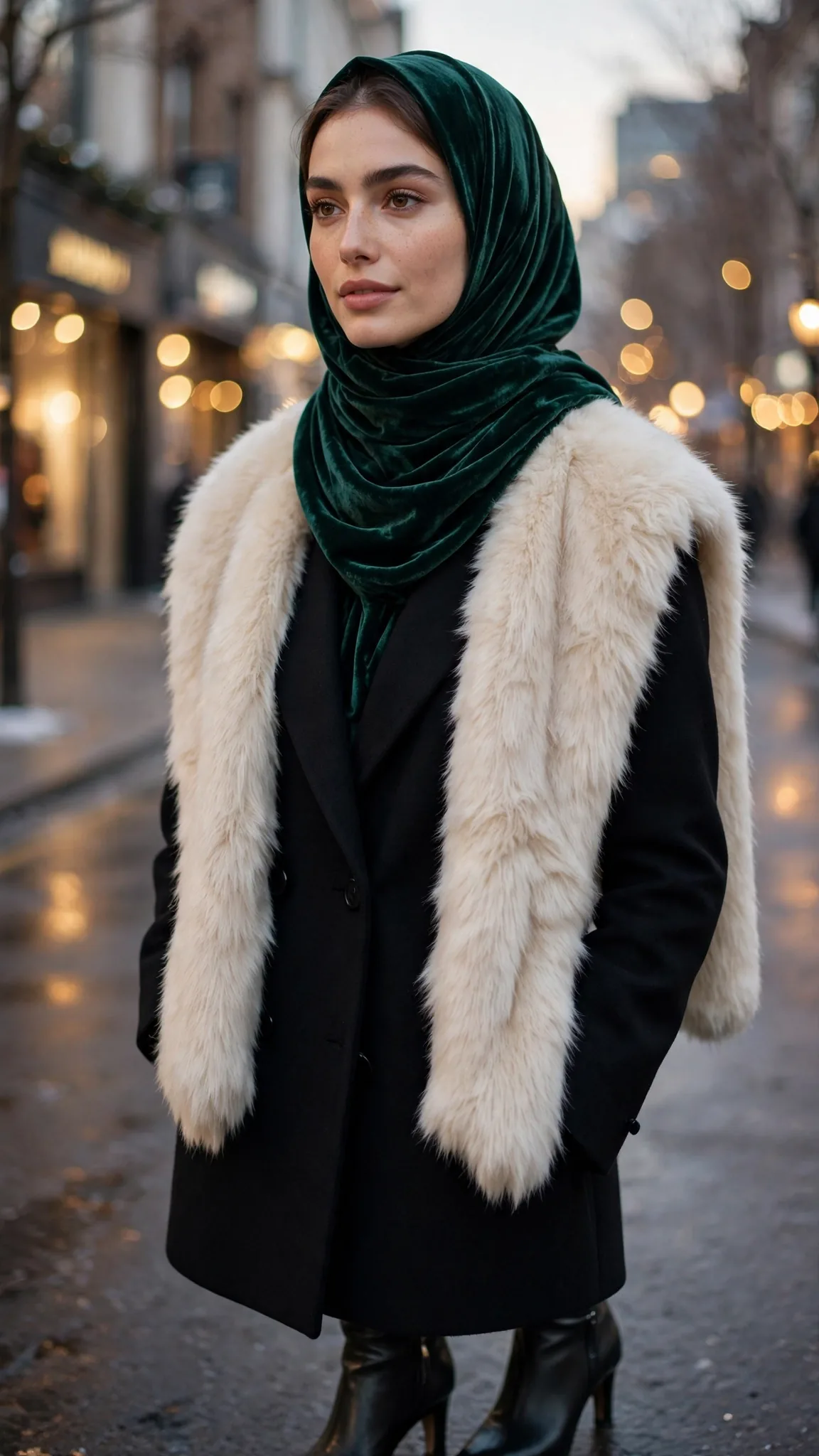
Winter evenings call for layers that feel special while keeping you fully covered. Swap the daytime puffer for a tailored wool coat in a rich tone, and trade the casual knit for a velvet or satin hijab that catches evening light. A faux-fur stole draped over the shoulders adds old-world glamour and surprising warmth, sitting neatly over a hijab without slipping. Finish with heeled ankle boots under a long dress or wide-leg trousers. These small swaps take the same modest formula from daytime errands to dinner reservations without missing a beat.
For formal winter events, a long faux-fur-trimmed cape or an elegant wool cloak over your dress keeps you warm without hiding the outfit. Keep a compact umbrella in your evening bag, since wet snow can flatten a carefully styled wrap. Choose closed-toe heeled boots with good grip for icy venue steps, and carry foldable flats only as a backup. However you celebrate the season, the goal stays the same: warmth, coverage, and confidence in every layer. Master these evening touches and winter becomes your most stylish season yet.
Keep Reading